

 Everyone


Watch Ewan Horne-Green Read from What the Wind Brings
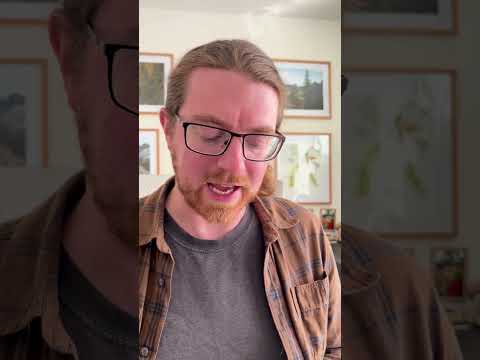

In this reading, Ewan Horne-Green shares a selection from What the Wind Brings, a novel that blends adventure, imagination, and neurodivergent identity into a story about outcasts, courage, and belonging.
The book follows Emily, a young neurodivergent protagonist navigating a world of shifting expectations, hidden strengths, and the search for where she fits. Through fantasy and metaphor, Ewan invites readers into a story where difference is not something to overcome—but something that holds meaning, insight, and possibility.
Q&A with Ewan Horne-Green
Following his reading, Ewan reflects on his creative process, his inspiration for writing, and what he hopes young people and families take from his work.
Q: What inspired you to write What the Wind Brings, and what message were you hoping to share with readers?
I really like adventure stories like ‘The Golden Compass’ by Phillip Pullman, where someone sets out to do a small personal good and ends up tipping the world on its end. I wanted readers to feel like they have the power to change everything, and that all it takes is caring about small things, like looking out for a friend.
However, the real reason I started out was a little silly. I love Robert Louis Stevenson’s adventure stories, but he writes as if women and girls don’t exist, and this annoyed me. Annoyance is an excellent fuel for making something. It can keep you doing your best work for years.
Q: The story follows a neurodivergent character navigating a world of expectations and difference. What drew you to centre this perspective in your writing?
A lot of it was because it was how I felt when I was twelve. But then I wanted to turn the societal pressure up to one hundred with life and death stakes. I only felt like it was life and death when I was twelve. I ended up capturing my feelings faithfully.
I was diagnosed with Autism at the age of twenty, and at about the same time I found, “The Wee Free Men” by Terry Pratchett, and instantly recognised Tiffany as like me if I was more selfless and heroic.
I’d like people to have that feeling as often as possible. It was wonderful. She read the dictionary from cover to cover because no one explained you weren’t supposed to! The way I cackled with joy and recognition.
Q: How does your experience as an animator, illustrator, and storyteller influence the way you build characters and worlds?
What the Wind Brings began as a series of illustrated poems, then it evolved into a pitch for a cartoon. It has been a playground to draw all my most sincere and silly ideas.
When I sat down to write it as a book, I found that I had a huge pile of things I had already imagined to pull from. I knew how Ferrywig looked, I knew about the Hats people wore, and what they meant.
Drawing things makes them strangely concrete and real. They stop shifting around in your head and start speaking in their own voices.
Q: What role does imagination play in helping young people understand identity, belonging, and difference?
I think imagination is the best thing about being human. Books let us into each other’s brains to see what we’re all thinking and how we put thoughts together. It builds mental muscles, and it makes putting yourself in someone else’s shoes as normal as brushing your teeth.
Q: You have described themes of outcasts and finding one’s place—what do you hope neurodivergent readers take from Emily’s journey?
I hope you come away thinking that there’s a million ways to be heroic exactly the way that you are now, without changing anything at all. You are the hero someone out there needs.
If you were different, you wouldn’t be there to do the brave things you’ve already done and will do in the future. You are irreplacable.
Q: What inspired you to begin facilitating youth writing workshops, and what do you hope participants gain from those experiences?
I hope I can give everyone permission to write stories and to share them.
There is sometimes a background feeling of, “No”, which we can breathe in by accident, and the only cure is to hear a “Yes”. You can also say “Yes” to yourself, and to your friends, too. That is strong medicine.
Q: In your view, how can creative writing be a tool for self-expression and empowerment for neurodivergent youth?
When you can see the things you’ve created in your mind outside of your mind, innocently sitting on the paper, it is proof that you are here; that you have things you love, and thoughts about the things you love. It is evidence that you are you, and that you have something you want to share.
Making something changes your brain. There is a reason it’s called “spelling”. Writing is magic and it changes the world.
Q: What has your own experience of neurodivergence taught you about storytelling and creativity?
Having a special interest in animation has brought me a lot of joy and a career that I love. I can’t really choose what my interests are, or decide where my energy wants to go.
This means I probably expect too much from my favourite medium. However, I do feel like it can save the world. If all of us had that attitude to our interests, the world would be an even more interesting place.
Has anyone else spotted a flag flying where young people are about the change the world? It is a jolly roger wearing a straw hat. That’s real magic.
Q: If there is one key message you would want our community to walk away with, what would it be?
Share stories with your friends. It’s one of the most OP gifts you can give.
Much love,
– Ewan Green (he/him)
About Ewan Horne-Green
Ewan Horne-Green is a Scottish writer and illustrator with a background in animation, storytelling, and visual arts. He has worked on animated feature films, television projects, and creative writing across multiple mediums, bringing a strong visual and narrative sensibility to his work.
He is also openly neurodivergent and draws from lived experience to shape characters and stories that centre difference, imagination, and belonging.
What the Wind Brings reflects these themes through a coming-of-age fantasy narrative that explores identity, resilience, and the experience of being misunderstood in a world that often expects conformity. His work speaks to young people navigating their own sense of place, and to readers who have ever felt outside of what is considered “normal.”
About Stories That Spark
“Sharing my story could help others.” — AutismBC Motto
One of the ways AutismBC puts Hope in Action is by centering real-life experiences and stories from our community—voices that inspire empathy, deepen understanding, and spark creativity.
To celebrate Autism Acceptance Month, we are proud to introduce Stories That Spark: a series of webinars, book readings, workshops, discounts, and giveaways, all grounded in literary experiences and storytelling.
Join us throughout April as we highlight engaging and thought-provoking events that amplify neurodiverse, intersectional, and Canadian voices, and celebrate the power of stories to build connection and understanding.
Through this series, we feature lived experiences and creative work that help bring Hope in Action to life by connecting people through storytelling, learning, and shared imagination.
Continuing the Conversation
Ewan Horne-Green’s work reminds us that stories are not only a form of expression—they are a way of making sense of identity, difference, and belonging.
Through What the Wind Brings, he offers young readers a world where imagination and neurodivergence are intertwined, and where being different is not a limitation but a source of strength and perspective.
As part of Stories That Spark, we are honoured to share his voice and creative work with our community during Autism Acceptance Month, celebrating the many ways stories help us see ourselves—and each other—more clearly.