

 Caregivers, Autistic Adults


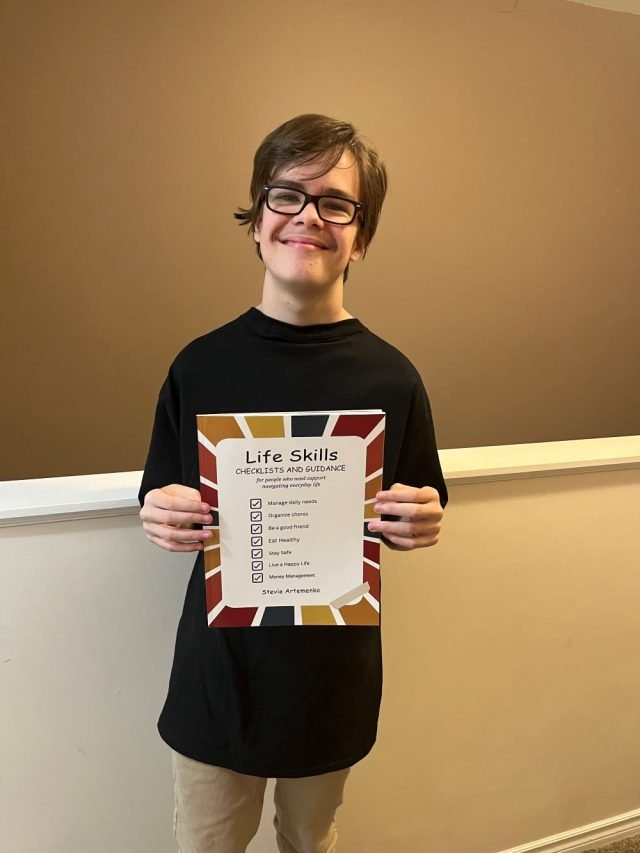
Stevie Artemenko is a passionate author, copywriter, special education assistant, and mother of three. She recently published a book “Life Skills: Checklists and Guidance for people who need help navigating everyday life” which is a resource for navigating executive functioning challenges. Read to the end of the blog to find the book for purchase.
Disclaimer: This book is not produced by AutismBC. While we strive to vet resources for neuroaffirming language and approaches, the content and guidance provided reflect the author’s perspectives. Any concerns or inconsistencies are the responsibility of the author, not AutismBC.
Can you tell us about the backstory around how and why you came up with the book?
Personally, I have always been a ‘list’ person to help me remember things and organize my thoughts. So, when our two oldest children could read, I began creating checklists for them to refer to, for things like getting ready for school, bedtime routines, etc. It helped reduce me constantly repeating myself, but also gave them a sense of independence and confidence.
When our third child was born at BC Children’s Hospital at 25 weeks, weighing just 1 ½ pounds, we were told, if he survived, there would be developmental delays and possible health issues and impairments.
Thanks to their incredible care and my son’s heroic spirit, he did survive. He was later diagnosed with mild cerebral palsy, bilateral hearing loss, autism, and an intellectual disability. From the very beginning, we received incredible support and advice from various health and community organizations. One of the tools that was consistently recommended as he got older, was to use visuals and/or written schedules for everyday life skills and routines. As I mentioned, I had used it before with my other children. I also work as a Special Education Assistant, and routine/checklists/visual schedules are often used with neurodivergent students to help them become more independent and feel a sense of security and confidence about what to do next.
Over the years with my son, I created many of these lists as he had a difficult time remembering or knowing what to do next due to his executive function challenges.
Fast forward, almost 18 years later and he is now in grade 12 and transitioning to adulthood! As I pondered this transition, I thought it would be helpful for him to have an all-in-one resource full of routines but when I searched online, everything I found was too wordy or complicated and I knew that would frustrate him. So, I decided to create my own and also include basic tips and reminders about healthy eating, social skills, and safety. When I put it all together, friends and colleagues suggested I get it published and so I did!
My son Kaden is very proud to be the inspiration for it and it has given him an even greater sense of confidence and independence as he uses this book as a tool. He also likes it that I don’t nag him as much as he now just refers to the book! Gratefully, it has also received very positive reviews on Amazon, so we are super excited about it.
Did you find it hard to perfect the content of the book?
As simple as the book is, it took about 6 months working with a publisher to get all the formatting, editing, and images just right, but I am very happy with how it turned out.
Do you have any advice for people who want to go into self-publishing, especially if you are neurodivergent?
I think it’s important to recognize your strengths and weaknesses. For me, I find it fairly easy to get my thoughts on paper, but I am not technical at all or good at things like formatting which is why I decided to work with a publisher. You can hire someone to do separate jobs like the formatting or editing or even hire a ghostwriter to write it if you have ideas, but of course you have to pay for that. If publishing a book is something you want to do, do it. Focus on your strengths and get help with the areas you struggle with.
How has your child’s executive functioning improved due to the resources you provided?
As I mentioned above, instead of me reminding him the steps about everyday tasks and routines, I started out by just saying look at your morning routine in the book, but now I don’t even have to do that. He just refers to it now. And every so often, we will go over a specific section like safety, or how to be a good friend when the timing seems relevant. But, it’s always there for him to refer to on his own.
Has your child found pleasure in any of the tasks/routines that you have outlined?
I think like anything in life, you feel empowered when you have learned something new and/or can do it on your own. He is definitely feeling more empowered and confident. For example, we are now starting to use the healthy eating and grocery list section of the book when we’re shopping for groceries as eventually I want him to start shopping on his own and making good choices around food and healthy eating, and he’ll often remind me if I include too many junk food items in my cart!
The nice thing about the book is that anyone with executive function or memory challenges, can use all, or just certain sections of the book depending on where they’re at or what they’re struggling with. I was very purposeful in making the book simple with its tips and routines but also mindful of all the things that I felt were priorities in living a healthy, happy life.
We truly hope it helps many individuals and families who struggle with executive function, learning, or memory challenges.
You can find Stevie’s book for purchase on Amazon.

Reviews for “Life Skills: Checklists and Guidance”
“Not just someone who feels they have an answer, Stevie Artemenko is an author who uses education and lived experience to bring an instructional book to life.
To me, this is a book for parents. Stevie is a great human being whose only goal is to help parents teach their kids who have IDD to navigate the routines of everyday living.
The book is simple to follow and outlines most of the key aspects of daily life. We all need a little help from time to time and Stevie gets that! Books like these have the power to remove some of the emotional toll on parents of kids with IDD by helping them (kids) create and maintain routines on the road to independence.”
“I found this book offers a practical and organized guide for all facets of life, helping to ease the stress of organization and planning in a household.
Helps place a sense of control and achievement back in the hands of the child/loved one, by giving them attainable goals for them to complete independently and check off themselves, fosters independence.
The lived experience of the author means the content of the guide is very realistic and reliable, as she uses her own expertise and passion to formulate each list.
A life toolkit in her book on organization and independence.”


