

 Everyone


Shayna Kershaw is AutismBC’s Regional Coordinator for the interior. In this article, she shares how her daughter Chloe found her love of playing hockey.
Hockey is not only Canada’s sport, but my family’s. Growing up, my baby brother played and going to his games was a consistent part of our weekends. My husband also played while growing up. We are huge Vancouver Canucks fans and watch hockey pretty much whenever we can.
Hockey really is life, as Chloe says.
Discovering a love for the sport
Now my three children all play. They all play very differently, but they all get on the ice in their gear and try to win for their team. They have all made friends through hockey and grown as people because of it. We are so lucky to have the Central Okanagan WildCats here in Kelowna for my son to play on.
My oldest, Chloe, started skating when she was two years old. As soon as she was able, we got her on the ice. She only started walking at almost eighteen months, but we wanted her on the ice as soon as she was able. Even back then, she was the calmest child on the ice. Her entire first group of lessons she didn’t skate. She was happy to just watch the other kids skate around with the instructor. She was on the ice and moved a bit but mostly sat and watched. Until the very last lesson, she got up and pushed the little chair around, moving her little feet behind it.
We did these lessons a second time, and now she skated. She eventually didn’t even need the support chair. From there she kept skating. It was one of her favourite activities by far. Back then we didn’t know she was autistic or neurodivergent at all (I suspected, however).
Then, once she hit kindergarten, she could try hockey. So, we got her the gear, and my husband took her, and she hated it. She went a few times and once it stopped being enjoyable for him, too, we stopped making her go. Looking back, it seemed to be a sensory issue; having to wear and manage all the gear and stick while still skating overwhelmed her.
Getting back on the ice
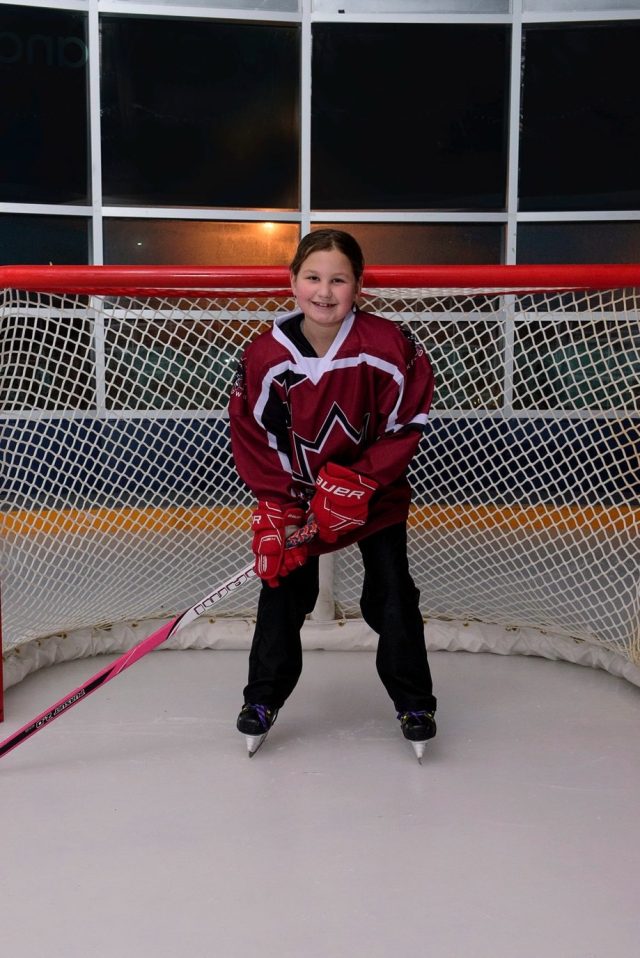
Once we moved to Kelowna, I noticed there was a “try ringette” option, and mentioned it to her. She was on the fence, but I knew she loved skating, and a friend played ringette, too, so it would be an easier transition to try it. She was anxious that it was the same as hockey. We told her it wasn’t the same as hockey, but similar.
She got on the team and really seemed to enjoy it! She started during the year Covid shut everything down, so we didn’t really get to watch her games or practices. Then she started leaning toward playing goal in ringette and they didn’t allow the girls to exclusively play goal until they are a few years older. Then she was not as keen to play ringette anymore as a player.
Noticing this change, we explored the hockey option again. She clearly had the drive and competitive nature to be a hockey goalie. She was still unsure, but we told her that it would be better than when she tried it before. My husband and I basically told her we knew she’d love it because after doing ringette we knew the gear wasn’t as much of an issue anymore and she enjoyed the sportiness and team aspect. There was still room for her to play on the girls’ hockey team once we told them Chloe wanted to play goalie. Clearly female goalies are always in high demand!
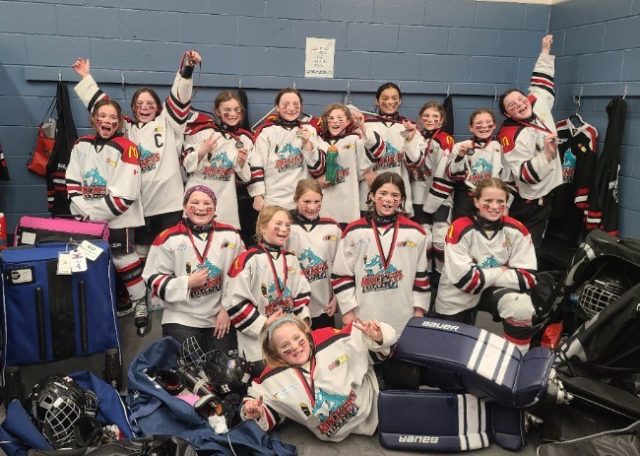
That year she was ten, and that hockey season was amazing. Though she came onto the team about a month into the season, the coaches and team were extremely welcoming and supportive. We told the coaches that she was autistic and had ADHD, and they were understanding and never treated her differently or saw it as a hinderance. If anything, they saw how much it seemed to help her: she learned things quickly and could focus on what was being taught.
All the camaraderie she received at the start fueled her love for hockey, even though she wasn’t yet a full-time goalie (that came next year). The first girl that welcomed her is still a great friend who loves Chloe for who she is. In comparison, her experience with ringette was less positive; the team aspect wasn’t as big of a focus it seemed. For example, when she scored her first goal in ringette, there was no real celebration from her teammates, whereas in hockey her teammates were ecstatic. (Many girls love ringette; this was just Chloe’s experience.)
Her first full season as goalie was intense. They lost almost every game, and she faced anywhere from 30 to 60 shots per game and at times there were 80 shots towards her. Because wins versus losses wasn’t going to be an accurate representation of her growth that year, we focused on her save percentage and goals against average stats. She was able to take the losses in stride and it made her a stronger person and goalie.
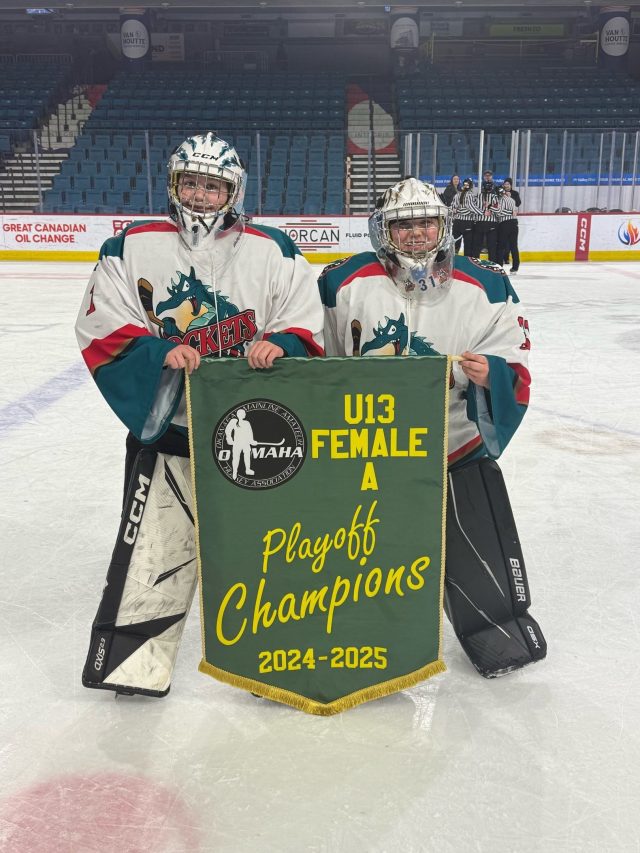
Now she’s 12 years old and the only female goaltender in Kelowna born in 2012. Because of this, she is on two teams: the Kelowna Minor Hockey Association’s (KMHA) female U13 house team and the female U13 rep team. Aside from this, she is often asked to fill in on other teams when their goalie is away. Suffice to say she is a very busy girl!
Interview with Chloe
I sat down and interviewed Chloe about playing hockey and being autistic and here are her succinct answers:
Shayna: What position do you play?
Chloe: Goalie
S: What do you like best about it?
C: You get to stop pucks, and everyone gets to jump on you at the end. And when you make a good glove save.
S: How did you first start playing hockey?
C: My parents forced me to, and it’s the best decision they ever made. I also tried ringette when we moved to Kelowna.
S: What’s your favourite part about the sport?
C: The people and winning.
S: What was the most exciting thing that’s happened since you started playing?
C: Playing against Winnipeg at WickFest in Surrey because they’re the second-best female team in all of Canada.
S: What would you tell other autistic girls who want to play?
C: Play. Just do what you want. Just go for it, do what you want to do.
S: How has being autistic affected you as a hockey player?
C: It makes me learn things better, but it hasn’t made things harder. I don’t really notice stuff like that [her autism]. It’s obvious that being autistic hasn’t made it so that I can’t play.
S: How does playing hockey make you feel?
C: Playing hockey makes me feel good. It’s fun. I feel awesome when I make a great save.
S: Have you won anything playing hockey?
C: I’ve won medals and MVP [most valuable player] awards.
S: Who is your favourite player?
C: Thatcher Demko (and Kevin Lankinen) – both Canucks goalies
S: Who is your favourite NHL team?
C: Vancouver Canucks!
Learning from my kids
What I’ve learned from Chloe (and my other children) is that autism does not define her. She is autistic, and it impacts her to be sure, but it doesn’t hinder her. She can play hockey as well as anyone else, and she actually tends to learn things faster than others because she is so focused during practices. Being autistic has become a superpower for her with hockey.
In the end, if you want to do something, just do it. Don’t let what others say affect your decisions and don’t let anything hold you back. Chloe wants to play professional hockey, and we support her and believe she can achieve that. Maybe that’s because of her autism. Even if it’s not, I know that being autistic won’t be why she doesn’t fulfill her dreams.
Autistic girls can achieve great things and do anything they choose to, and Chloe is just one example of this.


