

 Everyone


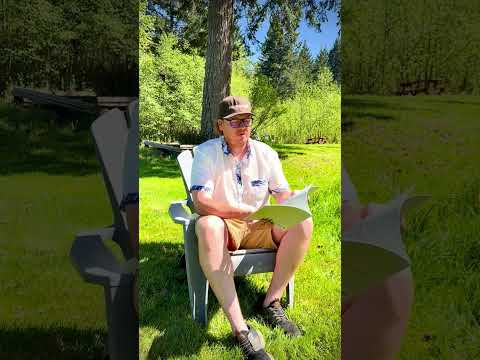
At AutismBC, our Stories That Spark series highlights voices that deepen understanding, compassion, and inclusion across communities. In this feature, we are pleased to share Graham Paul, a Canadian author, parent, and Human Services student based on Vancouver Island, as he reads from his book We Grow Together.
Graham Paul’s work reminds us that some of the most important stories are also the simplest ones — the ones that sit quietly between a child and an adult and say: you are not alone in this, and we are better when we grow together.
Watch Graham Paul read from We Grow Together
Q&A with Graham Paul
Q: What inspired you to write We Grow Together, and what message were you hoping to share with readers?
We Grow Together came from a really challenging time in my life. I was going through a deep burnout while trying to understand my mental health, my reactions, and eventually my autism and ADHD diagnosis, and at the same time I was trying to show up for my wife and young kids. There were a lot of moments since where I realized the level of love and support they have for me, and how that gave me the strength to get through my darkest days.
The message I wanted to share is simple but important: no one is expected to have it all figured out. Growth is something we do together, through connection, patience, and understanding, not something we’re supposed to do alone or perfectly. Human development is life-long and we need to be reminded to give ourselves grace when learning along life’s journey.
Q: The book is described as being for children and the adults who grow with them. What drew you to frame it that way, as a shared experience rather than just a children’s book?
We live in a fast-paced world where so many children’s books and toys alike are full of bright colours and moving parts, and I wanted to make a book that focused on reading and slowing down with children while stimulating conversations that foster connection and understanding.
Kids aren’t the only ones learning, adults are constantly adjusting, reflecting, and trying to do better too, and that message should be normalized for all. Ultimately, I wanted something that gives the adult reading this book a quiet moment to reflect while also connecting with the child. Those shared moments are where a lot of the real growth happens.
Q: Your work is shaped by your own mental health journey and a later-in-life autism and ADHD diagnosis. How did that experience, and the understanding that came with it, influence what you wrote and how you wrote it?
It changed everything for me. Before understanding myself, a lot of things felt confusing or frustrating. After my diagnosis, I finally understood myself. I started to see patterns: how I process things, how I regulate, and how I connect. That awareness brought a lot more compassion, both for myself and for others, and most of all, I was not alone, that there were many others out there like me.
That’s what shaped the tone of the book. It’s calm, patient, and non-judgmental. There’s no pressure to fix anything, just an invitation to understand, support, and grow together.
Q: Late diagnosis can be a profound and sometimes complicated experience. What would you want other adults who are navigating that realization, or parents who are seeing themselves in their child’s diagnosis, to know?
Most importantly, I want them to know to never give up on themselves, and to instead embrace themselves wholeheartedly. Growth is non-linear, so there will be good days and bad days, but gaining this understanding gives you a chance to move forward with greater self-awareness and self-compassion. And that doesn’t just help you; it impacts your relationships, your parenting, and the way you show up in the world.
Q: You are based on Vancouver Island and are actively involved in your community. What does it mean to you to be creating and sharing this work locally, and how has the island community shaped your perspective as a writer and parent?
There’s something special about sharing this kind of work in my own community and seeing it in local shops, libraries, daycares, and knowing it’s reaching families right here. Vancouver Island has a strong sense of community and connection, and that’s influenced how I think about this book. We have so many wonderful creators here, and I feel others inspired me to see it as something to share, to contribute, and to hopefully support people in a real, everyday way.
Q: What role do you believe picture books play in opening conversations about emotional growth, connection, and difference, particularly for neurodivergent children and families?
I think that picture books are one of the easiest entry points into big conversations. They create a safe, low-pressure way to talk about feelings, differences, and experiences that might otherwise be hard to explain. Especially for neurodivergent children, having language and representation matters, but just as important is helping the adults understand too. A good picture book doesn’t just teach; it opens a door for conversation. I illustrated this book to represent the human experience in a way that is not only relatable but easy to see in everyday life, no matter who you are or where you are in the world.
Q: You are currently studying Human Services alongside writing and parenting. How does that work inform the way you think about community, inclusion, and what families actually need?
For me, it grounds it in reality. In school and in placement, I see what other families are actually dealing with: the stress, lack of resources, burnout, and the need for real support. Over the last 3 months, I have worked in placement, supporting various autistic children, and feel empowered when I make a child feel seen and happy. I feel that this work has reinforced my desire to help support others in person-centred, inclusive, and trauma-informed ways.
Q: What do you hope a child feels after hearing We Grow Together, and what do you hope the adult reading it alongside them feels too?
For the child, I hope they feel safe, supported, and not alone. The idea is that it’s okay to feel what they feel and grow at their own pace. I also want children to be reminded to seek help from others when they need it and never to feel isolated in their experiences.
For the adult, I hope they feel a sense of pride, calm, and reassurance. Maybe even a reminder that they’re doing better than they think, and that growth doesn’t have to be perfect to be meaningful. Adults should reflect on times they themselves have been supported and share those stories with children. That is the beauty behind this book.
Q: If there is one key message you would want our community to walk away with, what would it be?
That growth isn’t something we’re meant to do alone, and together we can overcome anything. Whether it’s parenting, neurodiversity, mental health, or just figuring life out, we do better when we approach it with patience, understanding, and connection. That applies to kids, adults, and communities as a whole.
About Graham Paul
Graham Paul is a Canadian author, parent, and Human Services student based right here on Vancouver Island. His debut picture book, We Grow Together, is a gentle celebration of growth, connection, and learning side by side — for children and the adults who grow alongside them. His work is shaped by his own mental health journey and a later-in-life AuDHD diagnosis and reflects a deep commitment to building spaces where all children and families feel understood, supported, and seen.
About Stories That Spark
“Sharing my story could help others.” — AutismBC Motto
One of the ways AutismBC puts Hope in Action is by centring real-life experiences and stories from our community—voices that inspire empathy, deepen understanding, and spark creativity.
We are proud to continue Stories That Spark, a series of webinars, book readings, workshops, discounts, and giveaways, all grounded in literary experiences and storytelling. Through this series, we feature lived experiences and creative work that help bring Hope in Action to life by connecting people through storytelling, learning, and shared imagination.
Earlier this year, we welcomed Scottish writer and illustrator Ewan Horne-Green, whose novel What the Wind Brings explores neurodivergent identity, imagination, and belonging through adventure and fantasy. Today we are honoured to introduce a voice much closer to home.
Continuing the Conversation
We Grow Together reflects something AutismBC believes deeply: that connection is not a byproduct of support; it is the foundation of it. That the adults in a child’s life are not just guides but fellow travellers, figuring it out alongside them. And that a later-in-life diagnosis does not rewrite your story — it can clarify it, and open new ways of understanding yourself and the people you love.
Like Ewan Horne-Green’s What the Wind Brings, Graham’s book trusts its readers, children and adults alike, to meet each other in the space a good story creates.
As part of Stories That Spark, we are honoured to share Graham’s voice and work with our community, celebrating the many ways stories help us grow — and reminding us that we grow better together.
We Grow Together by Graham Paul is available now. Graham Paul is a Canadian author, parent, and Human Services student based on Vancouver Island.
Stories That Spark is an AutismBC series amplifying neurodiverse, intersectional, and Canadian voices through storytelling, literary events, and community connection. For more from this series, visit www.autismbc.ca/tag/stories-that-spark/


