

 Everyone


We sat down with playwright Alex K. Masse and lead actor Hailey Conner to discuss the upcoming Glitch Theatre Production, Faye’s Room.
“Faye’s Room by Alex K. Masse is the story of Faye Murphy, an autistic lesbian who works at a queer cafe… and happens to have the power to summon and hide in a magical sensory room at will. When she becomes trapped in this room with her least favourite co-worker, son of the founder and token heterosexual Chase McLure, an unlikely bond forms, and the two find themselves with a bit more in common than they’d thought. Faye’s Room is a moving exploration of neurodivergent solidarity, intergenerational bonds, and internalized ableism.”
About the Work
AUTISMBC: Faye’s Room is such a unique and layered story. Can you tell us how the idea for this production came about? What inspired this particular story?
ALEX: “I fell into playwriting kind of by accident through a program at the Frank Theater called Telling It Bent, which was about poetry and playwriting. I went for the poetry, ended up really liking playwriting, and that took me down a road of a lot of lovely mentorships, including LEAP at the Arts Club, which at the time was taught by Shawn [MacDonald, Managing Co-Artistic Director] of Glitch Theatre. And I really enjoyed that. And I really enjoyed level one. And for level two, it was like, ‘ooh, I get to write a one-act play instead of the little 10-minute experiments that I’ve been doing.’ And the idea just kind of came to me.
People ask me all the time, ‘where did you even get the idea for this?’ And it’s just kind of like autistic wish fulfillment, I guess. Sometimes, I wish I could just magically spawn a room and hide in it. And I wrote out the first act, the first monologue of the first act, and the first 10 pages, and just sent that into LEAP level 2. And that’s also how it ended up with Glitch. When Shawn came to Glitch, he was like, ‘we think that your play would really have a nice time in our little staged reading series that we’re doing.’ And then the staged reading went well, and now it’s a production. But it started as this picture in my head of this woman in this room. Because I sometimes wish that I had a room I could go to.
AUTISMBC: Alex, Faye is a richly written character—she’s autistic, queer, and has this magical ability to summon a sensory room. How much of your own lived experience made its way into the story or the character of Faye?
ALEX: “Faye is definitely a lot like me in many respects: autistic lesbian, we studied the same thing in college. And for a long time, she was just this character that was representing my lived experience. But her experience related to how she understands and grapples with her autism is radically different from mine.
I remember the language around autism when I was young and first grappling with being told, ‘hey, you’re autistic.’ A lot of it was like, ‘it’s something I have, but it’s not all I am. And it might hold me back, but I can beat autism.’ That was the messaging in the media. Something that I’ve noticed a lot in the autistic community, is that there is this rift between people who are diagnosed early versus those who maybe figured out something during the pandemic. A lot of Faye’s perspectives mirror those that I hear a lot [from late-diagnosed autistic people]. I think the shift started around the mid-tens.
Faye has a lot of the internalized ableism that I was able to work out through finding community. And Faye, linguistically and through the way that she views the world, doesn’t really have any neurodiverse community. She doesn’t know any other people with autism. I think that’s where the big rift comes from. We come from a similar background, but I am quite lucky to have found a support system that she never did, and she has a lot more stuff to unpack in that little area.”
AUTISMBC: Hailey, what was your first reaction when you read the script? What did it feel like to see an autistic character like Faye—written by an autistic playwright—and then step into her shoes?
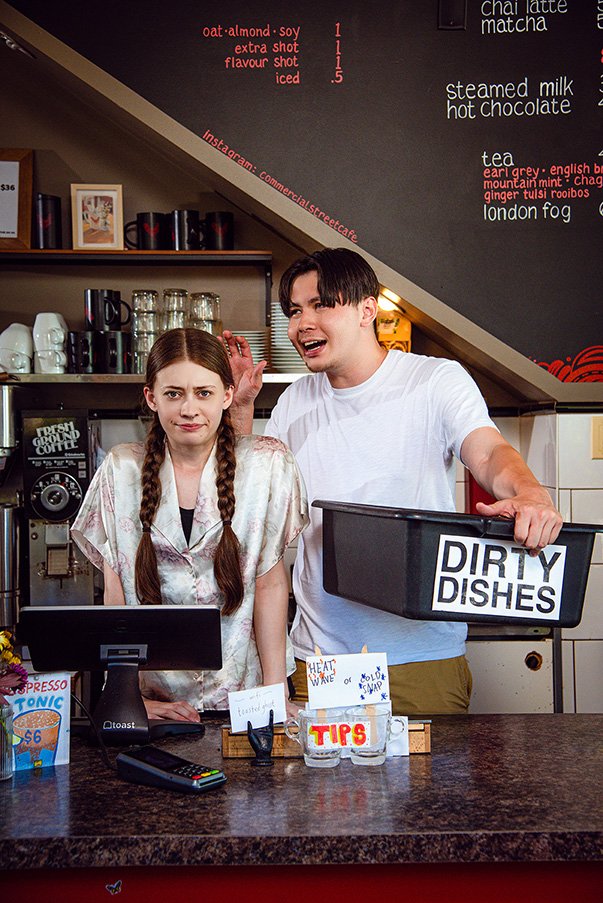
HAILEY: It’s definitely the most I’ve seen my own experience of autism represented. I don’t think we get a lot of [representations of] people that can pretend better. People who are going through the motions of being a person and other people not really picking up on their deep internal struggle with seeming fine to most people most of the time, but not being fine. I was one of those people too. There’s a reason I went into acting.
It’s nice to see a version of autism that isn’t like [allistic] people’s experience of it. What we get a lot of is the external presentation of it. And for Faye, it’s all about her internal state and the way she’s thinking. It’s nice to see high masking representation because we get less of that.
Neurodivergence & Identity in the Arts
AUTISMBC: This production openly centers neurodivergent and queer identities—not just in the story, but throughout the cast and crew. How does it feel to be part of a fully disability-led, neurodivergent-inclusive creative team?
ALEX: First thing that comes to mind is that they brought in a bunch of lamps, so we didn’t have to use hideous overhead fluorescents. I think that sets the tone for the vibe.
Accessibility is paramount when working at Glitch Theater. Everyone can share their accessibility needs. I don’t have to explain spoon theory every five minutes. It’s really great just being able to meet people where they’re at and being able to be understood. I don’t have to code switch as much and start using all the neurotypical niceties. I really appreciate that. It’s been really exciting because I also don’t have to spell out all the nuances of the play. It’s just been a really affirming space for folks.
HAILEY: The biggest difference for me is my own feeling of permission to accommodate myself. I didn’t have to say ‘oh, I’m autistic.’ Everybody just knows. And it’s just assumed. That’s always a thing that I’m never really sure how to bring up or what I should say. Everybody has a really different level of education around what that means and the ideas around autism have changed a lot in a very quick amount of time. I’m always feeling unsure about what context I need to give, whether I should say anything at all. It’s been nice to not have to deal with that.
Another big difference for me in this experience is just not feeling like I need to also act when I’m not acting, which has been great for not being exhausted as much by the process. The hardest thing for me has always been not the acting, but the feeling like I need to act as the character and then also act as a different character in between my lines. Not having to feel like I need to do that as much has been great.
AUTISMBC: Alex, Faye’s Room touches on identity-first vs. person-first language, internalized ableism, and neurodivergent solidarity. Why was it important to you to explore these themes on stage?
ALEX: A part of why it was really important is because there’s been a lot more public discussion about autism. At first, people were realizing just what autism could entail and basically getting the 101 of what masking is and what autism actually looks like and means. Today, we have the Tylenol thing. I could never have predicted that. I genuinely did not predict that this would be happening when my play about autism was getting produced.
It’s really important for people to realize that these conversations have always been happening, even if they weren’t always happening in the public eye. […] A lot of people are newly learning about disability, whether that is in the context of ‘maybe I’m neurodivergent’ or just realizing that we exist and are a lot more common than they would lead you to think. That it is really valuable. It’s really important to have these conversations at a time like this when a lot of people are starting to talk about autism and neurodivergence at large and the nuances of these experiences.
Faye and Chase come from totally different backgrounds in relation to neurodivergence and self-awareness and diagnosis and all these other nuanced things. It’s really important to be able to have a look into the neurodivergent world where these conversations have been happening for a really long time, but here’s what the experience itself can look like and all that. It ended up being both intentionally timely, but also way more timely than I thought it would be.
AUTISMBC: Hailey, what has it meant to you, as a neurodivergent performer, to be able to bring your lived experience into your role? Has this role changed how you see yourself as an actor or storyteller?
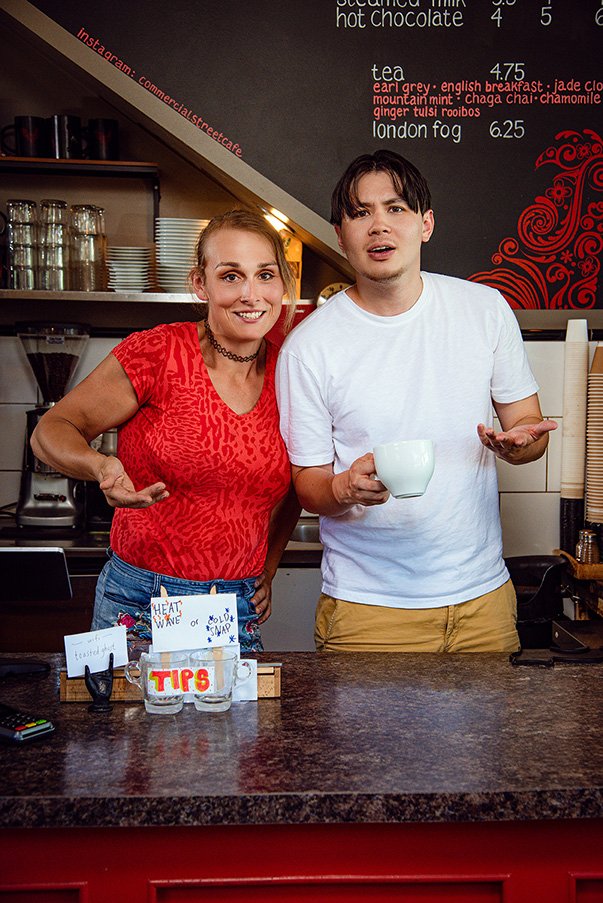
HAILEY: It’s a really interesting question to try to figure out how to portray autism as an actor, because I feel that inherently there’s differences in the presentation of emotions in autistic people. I’ve been exploring how I can both honour the fact that you might look like you’re feeling one thing and be feeling another, while also clearly telling the story. You want the audience to understand what’s going on, but I also want to represent that [internal] aspect of being autistic.
I relate to a lot of this character feeling like everybody is going to realize that you’ve been hiding something this whole time. But there’s a lot of differences between me and Faye as well. Exploring that’s really interesting because as much as there are similarities, every autistic person is so different. That’s what I’ve learned: the more autistic people I interact with, the more I realize how different we all are, which is awesome and fun to explore as an actor.
Representation Matters
AUTISMBC: Many autistic and neurodivergent people rarely see themselves represented accurately—or at all—on stage or screen. What does authentic representation mean to you, and how do you hope Faye’s Room contributes to that?
ALEX: I think that for representation to be authentic, the identities being represented need to be at the table. I am so sick of hearing neurotypical people try to write autistic people with no input from us whatsoever. It just falls into stereotypes or other pitfalls. It’s really important for people to be willing to do their research and listen when called in. Own-voice work is generally the gold standard of authenticity. And if you’re in a situation where you want to write a story that you can’t personally identify with, then listening to people, [consulting] sensitivity readers, doing your own research, that all goes a really long way.
HAILEY: I think [authenticity] is the most important thing. The first step is just having people in the room with that experience. If you don’t have that, then it’s just always going to be an outside perspective, and we’ve had a lot of that.
AUTISMBC: What do you hope autistic and neurodivergent audience members take away from Faye’s Room vs neurotypical audience members?
ALEX: I think that for autistic audience members and other people under the neurodivergence umbrella, they can feel less alone, first and foremost. [I hope they are] able to see themselves represented on stage in a way they might not have been before. And beyond that, it’s really, really important that these conversations are had just so people don’t have to have them with themselves. I’m not saying I can single-handedly destroy everyone’s internalized ableism, but I hope that by presenting this stuff on stage, maybe people can walk away thinking about their neurodivergence in new ways, questioning why they use person first language instead of identity first language, and the different ways that you can view autism and neurodivergence.
For neurotypical members of the audience, that also really could go a long way in changing the way that they talk about and understand autism. Especially in times like this, it’s important to be able to say ‘Hey, this is what it’s like, or at least this is what it’s like for some of us’ and let them into our world for a little bit. I had a family member come to see the staged reading and she came away from that just feeling like she understood me a lot more, and that meant a lot and made me very happy.
HAILEY: I hope that people realize that they don’t know everything and there’s always more to know. Your understanding of something can be expanded upon without excluding other people. We’re not trying to say everybody has this experience, but [Faye] does. If people come and they’re surprised by this version of an autistic person, then I hope that they can have a chance to unpack that for themselves.
Accessibility & Innovation
AUTISMBC: Faye’s Room offers sensory tools, low-sensory rooms, and multiple accessible performance formats. How does building access into the artistic experience impact the story and the audience connection?
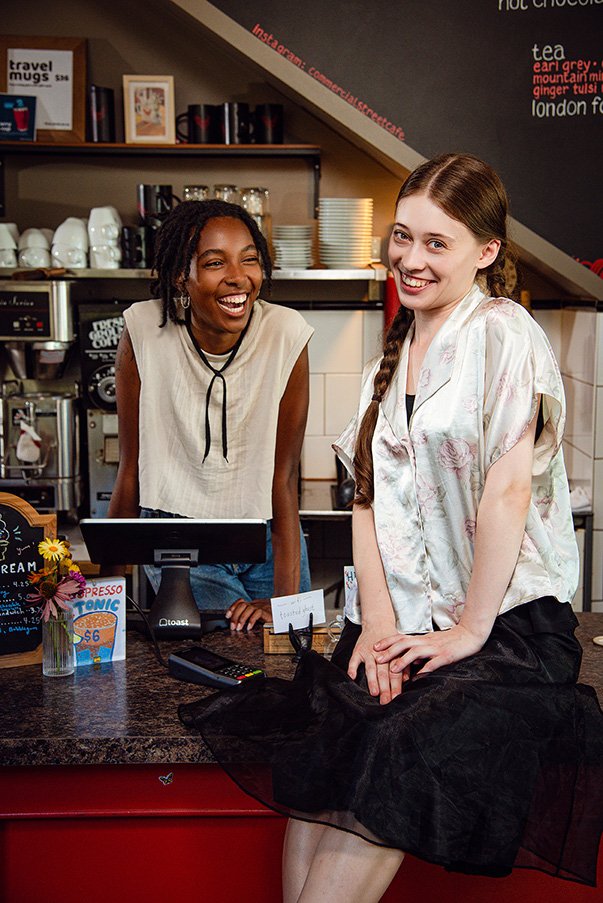
ALEX: If we were providing this story about neurodivergence and disability and then not having accessibility, that would be really hypocritical and unfair. There are a lot of different accessible shows: a mask mandatory and social distanced performance, an ASL interpreted performance, and a VocalEye described performance. We are also offering a low sensory area and a stim tool library. People who experience all kinds of accessibility needs and sensory differences can be accommodated and enjoy the work. I think that that’s just really important. [Glitch Theatre] has been really on top of just making sure that things are accessible wherever possible.
Even in the production of Faye’s Room itself, there’s been this question of, how do we portray the feelings of sensory overload and meltdown in a way that doesn’t cause sensory overload and meltdowns in the audience for neurodivergent folks attending. And I don’t know exactly what the answers have been because that’s more the directorial and designer end, but the fact that those questions are even being asked, shows a care and empathy and understanding that folks like us don’t often get in productions. It kind of sucks that these questions are often only asked in disability-led productions. But, in an ideal world, theaters like this wouldn’t exist because we would just be included. We’ve got to make our own accessibility. And Glitch has always done that in really wonderful ways.
HAILEY: As far as myself and my own process, we’ve been exploring how I don’t have a meltdown on stage. So, that’s great. Knowing that there’s flexibility within how we tell the story, I really feel my comfortability has been prioritized. I feel if there’s ever anything where I’m like, ‘I can’t do that,’ it would be respected a lot more than [in other productions] in the past.
And creating different points of access [is so important] to people that feel on the not-mainstream side of things. Intersectionality is so important because there are more of us when we all come together, even though our experiences are different. It’s so important that disabled people of all kinds work together for access and change. It’s really nice that we have accommodations built in.
Looking Forward
AUTISMBC: What advice would you give to emerging autistic or neurodivergent artists who are looking to create or perform but might not see a place for themselves yet?
ALEX: You will find community in the most pleasantly surprising ways, and you don’t have to conform your story or your experiences to a certain template or norm. People from all kinds of marginalized backgrounds often feel othered and excluded and isolated. I sure felt that way about being queer when I was younger. I hope knowing that spaces like Glitch are out there and that stories like Faye’s Room are being told, provides some solace and shows that we’re around. Conversations about accessibility are happening, even if they are only happening in places that are disability-led. They are happening. And people are interested in your story and your experiences. I mean, not to brag, but somehow opening night sold out. That’s 70 people and that’s not even counting all the other nights. Very cool, very fun stuff.
I advise against feeling like you have to bury yourself or your identity or fully lean into masking. Losing yourself in that mask is never worth it. It really burns you out and it’s really rough. And ever since I really came into myself and more or less stopped being able to mask my neurodivergent traits, I’ve been a much happier person and my creativity has only increased and I’ve only felt more comfortable telling my stories, even the ones that aren’t directly related to neurodivergence. There are people who want to hear your stories, there are people who will find solace and joy in your stories, there are people who will resonate and they’re out there.
HAILEY: I always felt in such a rush to be employed [as an actor]. It’s nice to be employed in the field that you want to be employed in, but you can become an actor at any age. It’s more important to be specific about the spaces that you want to be in, rather than just saying yes to every opportunity. I’ve found a lot of agency in making my own work. I have learned that I like it when I get to make the rules about what I’m allowed to do. I do dramaturgy for the theater company that I have and exploring your own work is a great avenue for anybody who wants to operate in a way that maybe is not conventional, because you just get to be in charge. I’ve done rehearsals in my house, in my pajamas, and it’s great.
AUTISMBC: Are there any future projects or creative dreams you’re excited about that you’d like to share with our community?
ALEX: Honestly, I don’t know what my next big thing is, and that is really exciting for me. I alternate between something in the music sphere, maybe I’ll do a little EP or something, or maybe I’ll go back to school and get my MA. Earlier this year, I had the privilege of going to Toronto where they staged an excerpt of my other work in progress, Two Cups, a Porch, and a Storm, which is about mermaids and abuse and survivorship and themes that are much darker and a little bit spookier than Faye’s Room. Maybe I’ll go back to that. Maybe I’ll publish a chapbook. I have no idea. I’m just, I’m so focused on just what opening night is going to be like for Faye’s Room, I have not really locked in on what I want to do next.
I’m usually such a by-the-books person. I have my paper agenda on my desk at all times and it is annotated to hell and back. And for once, I’m just letting myself bask in the success. I’m a 25-year-old playwright who has never gone to theater school. And I somehow have a sold-out opening night at the Cultch. I’m letting myself bask in that and not burning myself out by being like, ‘Ooh, what’s next? What’s next?’ There are many things that could be next, and I’m going to see what resonates.
HAILEY: No timelines on anything, but my theatre company, Unnecessary Mountain Theater, have been working on a play that my co-founder wrote. And we’ve done some workshops and taken it a few places. In the works is Rougarou written by Damian LeClair. So that’s something I’m kind of always working on. I also have a solo show that I have been stewing on for a while about combining contemporary dance and chronic illness.
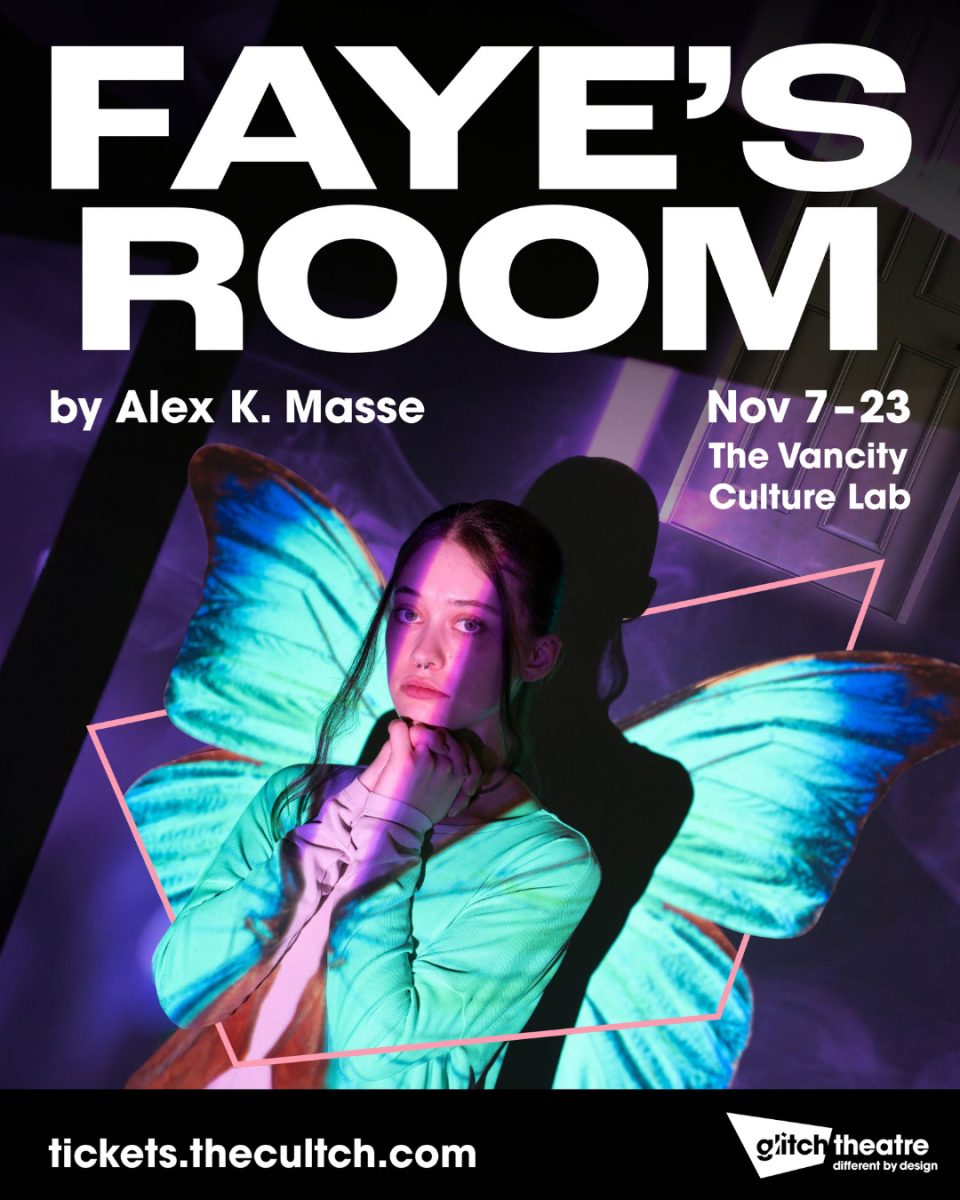
Faye’s Room will be presented November 8-23, 2025 at Vancity Culture Lab. Tickets are available at https://thecultch.com/event/fayes-room/
Follow Alex K. Masse’s work through their website: https://www.alexkmasse.ca/


